Documents related to first week contributions to the consultation can be found on the FAO web site.
For a brief summary of week 1: Brief_Summary_Theme1
February 10, 2010
Documents related to first week contributions to the consultation can be found on the FAO web site.
For a brief summary of week 1: Brief_Summary_Theme1
January 25, 2010
To register to FAO mail server and see the background note
This electronic consultation is an informal discussion forum to exchange views and information among the subscribers during the month of February 2010. It is a prelude to a face-to-face workshop which will be held in Brazil from 23-26 March 2010, co-organized by FAO, Embrapa, IFAD and IICA.
The technical discussions will focus on the following four complementary and inter-connected topics across a range of types (on-farm or area-wide) and scales of crop-livestock integration in different agroecologies in the developing regions:
In addition to the topic-specific core issues and their interactions, the following two cross-cutting themes will also be addressed:
i. Roles of stakeholders (public sector, private sector, civil Society — NGOs and parliamentarians, international research and development institutions, including the FAO, donors, etc.); and
ii. Capturing public goods and incentives for action (payment for environmental services, special market access based on adoption of good practices – including food safety and quality, global awards to private sector and civil society champions, etc).
January 18, 2010
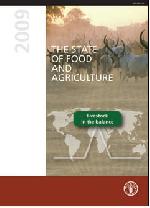 The full report is now available on the FAO website
The new publication of the FAO State of Food and Agriculture (SOFA) 2009: “Livestock in the balance” is planned to be officially launched during January 2010. The State of Food and Agriculture, FAO’s major annual flagship publication, aims at bringing to a wider audience balanced science-based assessments of important issues in the field of food and agriculture. Each edition of the report contains a comprehensive, yet easily accessible, overview of a selected topic of major relevance for rural and agricultural development and for global food security.
Key messages of the report are:
 Recent postings
 | Takele Geta on Introductory Guidelines to Par… |
 | Young on Three PhD positions on system… |
 | Kbd. Md. Nur Alam on SLP Crop residue project: disc… |
 | Lwanga on Competing uses, dynamics, and… |
 | Agriculutre Farming on 5th World Congress on Conserva… |
Recent SLP outputs News from ILRI blogs Systemwide Livestock Programme