News


In Science today:

‘….Although Brazilian sugar cane is the most competitive ethanol feedstock today, the United States and Europe are investing heavily in next-generation approaches. In 2009, the U.S. Department of Energy alone budgeted more than $325 million for biofuel science and demonstration plants. Much of that effort is aimed at “cellulosic ethanol,” or how to obtain fermentable sugars cheaply from straw, wood chips, and other plant material normally considered waste’

Science 327 (5968), 928. [DOI: 10.1126/science.327.5968.928]
Summary »Full Text »PDF »

Note: Next generation biofuel might have a major impact on livestock feeding, new opportunities for feeding monograstics and could be a treat to sustainability in some production systems. It will create  new competitive interests for cereal crop residues (conservation agriculture practitioners strongly advocating for keeping large amounts of residues in the field to maintain or improve long term productivity)

From the Food Climate Research Network

This briefing paper explores some of the arguments surrounding the relationship between what we feed and how we rear farm animals, and the availability and accessibility of food for human consumption. Does livestock production foster or hinder food security? In what ways are the contributions of intensive and extensive systems to food security different?

Link to PDF

Documents related to the consultation can be found on the FAO web site.

BriefSummary-Theme2-15-02-10Preview

Smart Investments in Sustainable Food Production: Revisiting Mixed Crop-Livestock Systems

M. Herrero P. K. Thornton, A. M. Notenbaert, S. Wood, S. Msangi, H. A. Freeman, D. Bossio, J. Dixon, M. Peters, J. van de Steeg, J. Lynam,  P. Parthasarathy Rao, S. Macmillan, B. Gerard, J. McDermott, C. Seré, M. Rosegrant

Farmers in mixed crop-livestock systems produce about half of the world’s food. In small holdings around the world, livestock are reared mostly on grass, browse, and nonfood biomass from maize, millet, rice, and sorghum crops and in their turn supply manure and traction for future crops. Animals act as insurance against hard times and supply farmers with a source of regular income from sales of milk, eggs, and other products. Thus, faced with population growth and climate change, small-holder farmers should be the first target for policies to intensify production by carefully managed inputs of fertilizer, water, and feed to minimize waste and environmental impact, supported by improved access to markets, new varieties, and technologies.

Read the full text

Documents related to first week contributions to the consultation can be found on the FAO web site.

For a brief summary of week 1: Brief_Summary_Theme1

Based on work completed in 2007, as part of the Comprehensive Assessment of Water Management in Agriculture, the articles in this special issue of ‘Agricultural Water Management’ (April 2010) provide an updated perspective on the investments and interventions needed to improve both irrigated and rainfed agriculture, and to achieve global food security goals. Furthermore, the authors shed light on the challenges and opportunities we must seize without delay, if we are to feed the world successfully by 2050 and beyond.

See the table of content of this special issue

The animal husbandry and poultry sectors in Vietnam will be reviewed and restructured so that they develop in a sustainable and competitive manner, an official said at a conference in HCM City.

Hoang Kim Giao, head of the Ministry of Agriculture and Rural Development’s Animal Husbandry Department, said under the Livestock Development Strategy, the country would increase the ratio of livestock production to 38% of the total agricultural output by 2015 and 42% by 2020 from the current 30%.

By 2020 the livestock industry targets production of 5.5 mln t of meat, 14 bln eggs, and more than 1 mln t of milk. This translates into 56 kg of meat, 140 eggs, and more than 10 kg of milk per capita per year.

By then the populations of pigs, chicken, and dairy cattle are expected to increase respectively by 2%, 5%, and 11% to 35 mln pigs, 300 mln chicken and 500,000 dairy cattle.

Apart from meeting the domestic demand, the livestock industry also would target overseas markets in the future, Giao said.

Shift to industrial farming

To achieve these targets and to meet the increasing food demand, the country would modernise its animal husbandry and poultry sectors, shifting from household-based to industrial farming, he said.

It would also focus on breeding hygiene and safety and reducing diseases to improve productivity and quality, he said. Slaughterhouses and meat processing plants would be required to install waste treatment systems.

Improving the quality of animal strains and developing the animal feed industry were also vital to the sector’s development, Giao said.

Education

Courses providing farmers information on farming techniques and food safety and hygiene would be organised, he added.

The livestock sector plays an important role in Vietnam since 72% of its population lives in rural areas. However, the small scale of its operations and outdated production techniques have led to high costs, rendering the country’s livestock produce less competitive than that of other countries.

The volatility in animal feed prices and high risk of disease are also causing difficulties for animal breeders.
To register to FAO mail server and see the background note

This electronic consultation is an informal discussion forum to exchange views and information among the subscribers during the month of February 2010. It is a prelude to a face-to-face workshop which will be held in Brazil from 23-26 March 2010, co-organized by FAO, Embrapa, IFAD and IICA.

The technical discussions will focus on the following four complementary and inter-connected topics across a range of types (on-farm or area-wide) and scales of crop-livestock integration in different agroecologies in the developing regions:

  1. From 1-5 February: Promising integrated crop-livestock systems and innovations that merit mainstreaming and scaling, and the tactics for implementation (including: technical designs of integrated systems and their economical, environmental and social dimensions; functional biomass production for multiple use; Farmer Field Schools, Farmers Clubs, Cooperatives, Associations etc for participatory farmer learning and adoption, and for economies of scale and competitiveness; knowledge services and communication needs, common resource management issues etc).
  2. From 8-12 February: Input and output market linkage development for promising crop-livestock systems and associated input and output supply chain processes and public-private service providers for different production systems and diverse markets (including: constraints and opportunities in input supply chains covering production inputs of seeds, agro-chemicals, farm power, equipment and machinery, veterinary services, advisory and innovation systems on good farming practices, marketing infrastructure and organization forms etc; constraints and opportunities in output supply chains covering animals for meat, milk and other dairy products, hides and skins from cattle and small ruminants, and meat and eggs from poultry, and meat from pigs; and opportunities for processing in integrated production systems etc).
  3. From 15-19 February: Political will, and policy and institutional support for the adoption and enabling the spread of innovations and practices associated with promising crop-livestock systems for food and nutritional security (including: sector policies, goals and strategies; strategic planning; enabling environment including infrastructure, credit, marketing, insurance, land tenure etc; tactics for action, incentives, regulations, strategic directions for change in extensive and intensive crop-pasture-livestock systems etc).
  4. From 22-26 February: Research needed to generate knowledge and innovative practices to underpin farmer adoption and scaling of promising crop-livestock systems for sustainable production intensification (including: technical, biological, nutritional, landscape, economic, environmental and social dimensions of integrated systems and practices; on-farm and area-wide integration of crop-livestock systems; functional biomass production and prioritization of its multiple role and use; feed and nutritional formulations; animal health management; effective innovations systems and processes; linking research result to policymaking etc).

In addition to the topic-specific core issues and their interactions, the following two cross-cutting themes will also be addressed:

i. Roles of stakeholders (public sector, private sector, civil Society — NGOs and parliamentarians, international research and development institutions, including the FAO, donors, etc.); and

ii. Capturing public goods and incentives for action (payment for environmental services, special market access based on adoption of good practices – including food safety and quality, global awards to private sector and civil society champions, etc).

The full report is now available on the FAO website

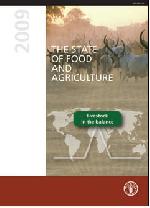
The new publication of the FAO State of Food and Agriculture (SOFA) 2009: “Livestock in the balance” is planned to be officially launched during January 2010. The State of Food and Agriculture, FAO’s major annual flagship publication, aims at bringing to a wider audience balanced science-based assessments of important issues in the field of food and agriculture. Each edition of the report contains a comprehensive, yet easily accessible, overview of a selected topic of major relevance for rural and agricultural development and for global food security.

Key messages of the report are:

  • The livestock sector is expanding rapidly, driven by population growth, rising affluence and urbanization.
  • Decisive action is required if increasing demand is to be met in ways that are environmentally sustainable and contribute to poverty alleviation and improved human health.
  • The contribution of the livestock sector to poverty alleviation should be enhanced through appropriate policy reform and investments within a framework of broader rural development policies.
  • Governance of the livestock sector should be strengthened to ensure that its development is environmentally sustainable and that it both adapts to and contributes to mitigating climate change.
  • The neglect of animal-health systems in many parts of the world must be redressed, and producers at every level must be involved in the development of animal-disease and food-safety programmes.

SOFA09_En_low-res

The International Organization for Animal Health (OIE) has announced that it plans to study the impact of livestock and poultry production on climate change, its first foray into environmental issues.

OIE director-general Bernard Vallat noted that there are interests that have suggested that eating fewer animal products would benefit the environment but said the issue should not be oversimplified. “It’s a question that needs to be studied with a lot of distance,” he said.

Vallat said it must be recognized that livestock and poultry production provides the world with meat, milk and eggs and should not be cut back at a time when the world’s growing population demands and needs more protein.

Source: Feedstuff

« Previous PageNext Page »

Design a site like this with WordPress.com
Get started