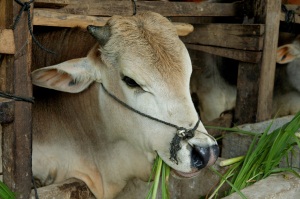
The final report of the SLP projet Balancing livestock needs and soil conservation: assessment of opportunities in intensifying cereal–livestock systems in West Africa led by IITA in collaboration with ICRISAT and ILRI is now available on line
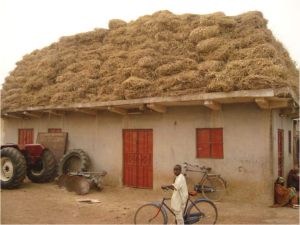
Photo: Tahirou Abdoulaye (IITA)

The general objective of the project was to identify key areas where research can make a difference in balancing trade-offs among livestock, soil, and crops, while taking advantage of synergies in evolving crop–livestock systems. The project focused on the identification of socioeconomic factors influencing decision-making on crop residue uses, quantification of trade-offs in using crop residues as soil amendment or livestock feed, and the identification of entry points for improving the productivity of cereal–legume–livestock systems.

Published: Jun 2010 – IIED and FAO

Recent years have witnessed a renewed interest in agricultural investment. In many cases, this has translated into large-scale acquisitions of farmland in lower- and middle-income countries. Partly as a result of sustained media attention, these acquisitions have triggered lively if polarised debates about “land grabbing”. Less attention has been paid, however, to alternative ways of structuring agricultural investments that do not involve large-scale land acquisitions. These include a wide range of more collaborative arrangements between investors and local smallholders and communities, such as diverse types of contract farming schemes, joint ventures, management contracts and new supply chain relationships. Drawing on a literature review, this report explores the range of business models that can be used to structure agricultural investments in lower- and middle-income countries, and that provide an alternative to large-scale land acquisitions.

The Fodder Adoption Project has recently published Fodder Fact Sheets for Ethiopia in English, Amharic and Oromiffa

Seen on IIED website

The ancient tradition of pastoral nomadism in landlocked Niger in West Africa is a source of huge cultural wealth in one of the poorest countries on earth. But with Niger’s eastern reaches suffering 35 years of drought — an entire generation’s worth — local pastoralists have faced a massive challenge. Diffa, les premiers matins du monde is a new video that tells the stories of many of these pastoralists and how they have coped with increasing drought.

An interesting letter exchange between John McDermott (ILRI’s Deputy Director General for Research) and Vicki Hird (Senior Food Campaigner at Friends of the Earth) is published in the June 2010 issue of People&Science

An interesting study by Wageningen University which unfortunately ignores completely livestock in the system, crop residues playing a major as feed. System specific trade-off analyses are certainly needed to assess competitive use of crop residues to either feed animals, maintain soil productivity or produce energy looking both at short and long term impacts on livelihoods and system productivity.

Following the launch of the ILRI new website few weeks ago, link to the ILRI-SLP Feed Database was lost. It is now re-established

Visit the Feed Database

Joint Publication from Save the Children, FAO and ECHO on Participatory Rangeland Management in the specific context of Ethiopia is available on line.

‘The Forum for Agricultural Research in Africa (FARA) proposed the Integrated Agricultural Research for Development (IAR4D) as an innovation system framework that should form the base upon which transformation of agricultural research in SSA should be considered. The IAR4D concept aims to deviate from the traditional linear configuration of ARD by encouraging the engagement of multiple actors along the commodity value chain for the promotion of the process of innovation in the agricultural system. In IAR4D, innovation evolves through continuous interaction among players, utilisation of feedback, analysis and incorporation of lessons learned between different processes. This essentially draws onthe knowledge of relevant actors at each stage. The framework creates a network that considers the technical, social, and institutional constraints in an environment that facilitates learning with the ultimate aim of generating innovation rather than mere research products or technologies. IAR4D cannot but be complex, and would certainly require fundamental changes in the wider institutional and policy environment in order for it to promote the process of innovation.’ Monty Jones Executive Director FARA

Link to the full document

Read today in the New Agriculturalist

Livestock and pensions provide the main source of livelihood for the farmers living around the Hoachanas settlement situated in the Kalahari Sandveld of Namibia. Small stock, such as goats and sheep, are crucial for food and income, with the area too dry for crop and feed production. But mortality of animals due to dry season feed shortages and poor animal health are a major constraint. However, an initiative to bring partners together to discuss and implement opportunities to improve production has stimulated a public-private partnership (PPP) to provide animal health services and inputs.

The initiative, supported by the International Crops Research Institute for the Semi-Arid Tropics (ICRISAT) and the International Livestock Research Institute (ILRI), was set up in 2008, as part of a wider Livestock and Livelihoods (LILI) project*, to help facilitate discussions amongst relevant stakeholders to improve livestock markets in southern Africa. The approach, known as an Innovation Platform (IP), to bring partners together to identify bottlenecks and opportunities and collectively generate solutions is working in three countries, Mozambique, Namibia and Zimbabwe.

Read the rest of the story

Design a site like this with WordPress.com
Get started