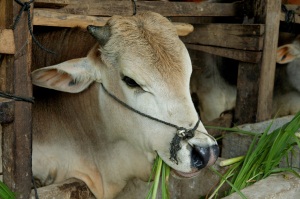
 Following the launch of the ILRI new website few weeks ago, link to the ILRI-SLP Feed Database was lost. It is now re-established
Animal Feeding
Archived Posts from this Category
June 3, 2010
Sub-Saharan Feed Database back online
Posted by brugerard under Animal Feeding, ForagesLeave a Comment
April 9, 2010
Invitation to Join FAO Knowledge Sharing Network for Animal Nutritionists
Posted by brugerard under Animal Feeding, FAO, News1 Comment
The importance and consequences of animal feed and feeding has largely been under-estimated and under-valued by donors, development agencies and policy makers alike. To rectify this, FAO is in the process of forming a network for all those with an interest in animal feeds and feeding. The objective is to facilitate the exchange of knowledge and information. It is envisaged that the network will function through the FAO Feed Portal which will be operational in the coming months, and will provide a platform for debate on a wide range of animal nutrition related issues, for example: research and development in developing countries, challenges and opportunities in meeting the demand for feeds; the importance of animal nutrition in increasing livestock productivity and mitigating greenhouse gases and pollutants from livestock systems, and preparing adequate responses to ongoing global warming.
The long term goal is to launch a Global Feed Initiative and it is hoped that discussions through this network will pave the way for achieving this.
Those working primarily on animal feeds and feeding are invited to join the network by providing the following information to Harinder Makkar (Harinder.Makkar@fao.org)
FAO, Animal Production Officer (Animal Nutrition).
- Name (essential):
- Email (essential):
- Contact details (optional) including postal address, telephone and fax numbers, website.
- Primary area of interest/expertise (please do not list more than three areas) (essential)
- CV and List of Publications in the last 5 years (optional)
- Are you:
a) willing to have your details listed publically on the FAO Feed Portal, or
b) would you prefer they remain restricted to FAO.
If interested please provide the above information by the end of April . Please feel free to pass this invitation onto other colleagues who you believe may wish to join the Network.
February 4, 2010
Integration or specialization: Vietnam livestock and poultry industry under review
Posted by brugerard under Animal Feeding, Crop-Livestock, Food security, News, South East AsiaLeave a Comment
The animal husbandry and poultry sectors in Vietnam will be reviewed and restructured so that they develop in a sustainable and competitive manner, an official said at a conference in HCM City.
Hoang Kim Giao, head of the Ministry of Agriculture and Rural Development’s Animal Husbandry Department, said under the Livestock Development Strategy, the country would increase the ratio of livestock production to 38% of the total agricultural output by 2015 and 42% by 2020 from the current 30%.
By 2020 the livestock industry targets production of 5.5 mln t of meat, 14 bln eggs, and more than 1 mln t of milk. This translates into 56 kg of meat, 140 eggs, and more than 10 kg of milk per capita per year.
By then the populations of pigs, chicken, and dairy cattle are expected to increase respectively by 2%, 5%, and 11% to 35 mln pigs, 300 mln chicken and 500,000 dairy cattle.
Apart from meeting the domestic demand, the livestock industry also would target overseas markets in the future, Giao said.
Shift to industrial farming
To achieve these targets and to meet the increasing food demand, the country would modernise its animal husbandry and poultry sectors, shifting from household-based to industrial farming, he said.
It would also focus on breeding hygiene and safety and reducing diseases to improve productivity and quality, he said. Slaughterhouses and meat processing plants would be required to install waste treatment systems.
Improving the quality of animal strains and developing the animal feed industry were also vital to the sector’s development, Giao said.
Education
Courses providing farmers information on farming techniques and food safety and hygiene would be organised, he added.
The livestock sector plays an important role in Vietnam since 72% of its population lives in rural areas. However, the small scale of its operations and outdated production techniques have led to high costs, rendering the country’s livestock produce less competitive than that of other countries.
The volatility in animal feed prices and high risk of disease are also causing difficulties for animal breeders.
January 27, 2010
Job opportunity CIAT- Forage and Livestock Systems Specialist Asia
Posted by brugerard under Animal Feeding, Crop-Livestock, Forages, Job opportunityLeave a Comment
CIAT is seeking applications for the position of a Forage and Livestock Systems Specialist. The position will be based at the Regional Office of CIAT in Asia, in Vientiane, Lao PDR, and will be housed within the Tropical Forages Program of CIAT.
CIAT in Asia has worked for more than two decades in Asia using multipurpose tropical forages to Improve farmer’s livelihood through more efficient and sustainable agriculture and livestock production systems while increasingly giving attention to reducing the ecological footprint in the framework of CIAT’s concept of ‘Ecoefficient agriculture for the poor’ ( for more information, please visit http://www.ciat.cgiar.org). Current project activities are implemented in Laos, Vietnam, Cambodia, and Thailand. The appointee will be responsible for the execution of these on-going projects and for the development of new research for development proposals. The forage specialist will also be expected – in collaboration with the Tropical Forages and Asia teams – to contribute to the adaptation of the vision and strategy on tropical forage research in a thematic and regional context.
CIAT is one of the 15 not-for-profit research institutions that make up the Consultative Group on International Agricultural Research (CGIAR) funded by various countries, private foundations, international and regional organizations. CIAT conducts socially, economically, and environmentally progressive agricultural research aimed at reducing hunger and poverty, and preserving natural resources in developing countries.
Role and responsibilities
The incumbent will report to the Tropical Forages Program leader and the Regional Research Coordinator Asia.
In coordination with the CIAT’s Tropical Forages and Asia teams the appointee will:
- Develop and undertake research in forage based crop-livestock systems.
- Develop and participate in capacity-strengthening programs related to the above work.
Specific activities include
Overseeing the implementation of on-going CIAT research projects in the fields of forages and livestock systems in southeast Asia. - Providing support in the area of forages and livestock to CIAT programs in Asia.
- Contributing to capacity building of research and development practitioners including governmental and
non-governmental institutions and other research and development partners in the area of forage based livestock-crop systems directed at improving smallholder livelihoods with reduced environmental
impacts. - Developing new research for development proposals in the fields of forages and livestock systems in
Asia that build on the outcomes of previous research and network of partners. - Maintaining and strengthening the network of forage related research and development in the region and with advanced research institutions from within and outside the region, with a particular emphasis on mentoring, capacity building, and collaborative activities with regional research for development institutions. Collaboration with sister centers from the CGIAR, in particular ILRI (www.ilri.cgiar.org) are sought.
- Strengthening the link between CIAT’s Asia, Africa and Latin America programs in the fields of forages
and livestock systems, and develop joint and complementary projects, where possible. - Contributing to CIAT’s regional activities through management and strategic planning activities.
- Contributing to the representation of CIAT in research, donor, partnership and other fora, including
research publications and external communications.
Requirements
The candidate shall have the following competencies, skills and experience:
- PhD, preferably in Agronomy or Livestock production, with good knowledge of Tropical Forages.
- At least 5 years of relevant and successful experience in agricultural research.
- Demonstrated understanding of the interface between social, economic, and environmental impacts of agriculture.
- Demonstrated capacity in developing and implementing innovative research, contributing to the
advance of knowledge related to the above. - Demonstrated participation in resource mobilization efforts.
- Capacity in working in teams representing diverse range of nationalities, cultures and scientific
disciplines, including strengthening of strategic partnerships based on mutual respect and efficient
collaboration. - Experience in management of projects will be advantageous.
- Excellent English, both written and spoken.
Terms of employment
The position is internationally recruited. The contract will be for a two-year period, renewable depending on
performance in research outputs and resource mobilization. CIAT offers internationally competitive salary
packages. CIAT is an equal opportunity employer, and strives for staff diversity in gender and nationality.
Women and candidates from Asia are particularly encouraged to apply.
Applications
Applicants are invited to send a cover letter illustrating their suitability for the above position against the listed qualifications, competencies, and skills, together with a detailed curriculum vitae, including names and addresses of three referees knowledgeable about the candidate’s professional qualifications and work experience. Applications should be addressed to the Leader of CIATs Tropical Forages Program, Michael Peters (m.peters-ciat), with copies to the Regional Coordinator, CIAT Asia, Rod Lefroy (r.lefroy) and CIATs Human Resources (j.c.novoa). (add @cgiar.org for email addresses) . Applications should clearly indicate `Application for Forage Resource Specialist Asia both in letters or email submissions.
All applications will be acknowledged, only short listed candidates will be contacted.
Closing date for applications: February 22, 2010.
To learn more about CIAT, CIAT’s program in Asia and CIAT’s forages work
January 14, 2010
World Bank is looking for a Livestock Expert (Breeding, Animal Nutrition – India)
Posted by brugerard under Animal Feeding, Job opportunity, South Asia, World Bank[2] Comments
“The World Bank is looking for an experienced livestock consultant -an expert on technical matters in the areas of breeding and animal nutrition. They need someone who can bring to India the latest in international best practices in these areas”.
Send names and references to: Mr. Vinod Ahuja (FAORAP) vinod.ahuja@fao.org
December 10, 2009
En Afrique de l’Ouest la commercialisation des résidus de culture procure des rentrées financières
Posted by Peter Ballantyne (ILRI) under Animal Feeding, Crop Residues, Crop-Livestock, LPG | Tags: IITA, LPG2009, West Africa |Leave a Comment
Tahirou Abdoulaye, socio-économiste l’IITA, a expliqué durant sa participation à la réunion du Systemwide Livestock Programme d’Addis Ababa : “Une évolution claire dans la régions est le développement rapide des marchés et l’émergence des marchés pour les aliments du bétail, concernant principalement les résidus de culture… ces marchés procurent un bénéfice immédiat pour les agriculteurs. L’utilisation des résidus pour l’alimentation du bétails entre en compétition avec un bénéfice à plus long terme qui concerne la conservation de la productivité des sols. Les agriculteurs ont naturellement tendance a favoriser les bénéfices à court terme.”
Voir sa presentation :
December 2, 2009
Improving the value of maize as a livestock feed in East Africa
Posted by Peter Ballantyne (ILRI) under Animal Feeding, Crop Residues, Crop-Livestock, LPG | Tags: CIMMYT, East Africa, LPG2009, Maize, tradeoffs |Leave a Comment
On 1 December 2009, Dennis Friesen (CIMMYT) presented CIMMYT work on maize as a livestock feed to the CGIAR Systemwide Livestock Programme Livestock Policy Group Meeting.
The starting point of the research was the recognition that maize stover (residues) is important as livestock feed in Eastern Africa, however, stover traits are not an important priority in maize breeding. The project sought to:
- understand the influence of livestock related factors on farmers choice of maize cultivars.
- identify superior dual-purpose maize cultivars from existing maize germplasm for diverse agro-ecological zones.
- define opportunities and strategies for further genetic enhancement towards dual-purpose maize.
- develop new tools for quick and economical on-field assessments of stover fodder value in crop improvement work.
- propose additional selection criteria for variety releasing agents that take into consideration stover quality
As conclusions, he presented 4 ‘principles’:
- Current release criteria with focus on grain remain important
- Stover traits are additional criteria not substituting criteria
- Go for win-win situations
- Facilitate optimization of whole plant utilization (also beyond fodder)
See his presentation:
December 1, 2009
From ‘no-win’ to ‘win-win’ – managing the tradeoffs between forages as feeds or for soil improvement
Posted by Peter Ballantyne (ILRI) under Animal Feeding, Crop Residues, Crop-Livestock, LPG | Tags: Central America, CIAT, LPG2009, tradeoffs |Leave a Comment
Speaking at the December 2009 SLP meeting in Addis Ababa, Michael Peters (CIAT), introduced a project in Nicaragua to study tradeoffs between using specific forage plants either as feeds for animals or for soil improvement and soil fertility maintenance.
The project explores three issues: feed for cows, soil fertility, and longer term sustainability. The aim of the research is for the farmer to go from a “no-win to a win-win situation.”
Peters emphasizes that the farmers themselves are aware of the tradeoffs and will sometimes aim for a production effect (for cattle), and at other times for an environmental effect (on their soils).
One interesting dimension is that “we as researchers have to caution sometimes the farmers not to be too enthusiastic” about the new technology they co-created…
See the presentation:


 Systemwide Livestock Programme