Crop-Livestock


Smart Investments in Sustainable Food Production: Revisiting Mixed Crop-Livestock Systems

M. Herrero P. K. Thornton, A. M. Notenbaert, S. Wood, S. Msangi, H. A. Freeman, D. Bossio, J. Dixon, M. Peters, J. van de Steeg, J. Lynam,  P. Parthasarathy Rao, S. Macmillan, B. Gerard, J. McDermott, C. Seré, M. Rosegrant

Farmers in mixed crop-livestock systems produce about half of the world’s food. In small holdings around the world, livestock are reared mostly on grass, browse, and nonfood biomass from maize, millet, rice, and sorghum crops and in their turn supply manure and traction for future crops. Animals act as insurance against hard times and supply farmers with a source of regular income from sales of milk, eggs, and other products. Thus, faced with population growth and climate change, small-holder farmers should be the first target for policies to intensify production by carefully managed inputs of fertilizer, water, and feed to minimize waste and environmental impact, supported by improved access to markets, new varieties, and technologies.
Read the full text

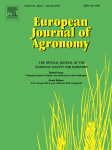
Volume 32, Issue 1, Pages 1-120 (January 2010)

This special issue is the product of the First International Symposium on Farming Systems Design organized in September 2007 in Catania, Italy by the European and American Societies for Agronomy (ESA and ASA), the International Environmental Modelling and Software Society and the International Farming Systems Association.

The challenge is ‘to produce methods and tools that can be used locally by applied researchers and extension specialists to adapt cropping systems in collaboration with farmers…
From mono-criteria to multi-criteria design. Even if the production function of cropping systems remains a major pillar of sustainability in many regions of the world, it has to be combined with an increasing number of other assessment criteria related to the negative externalities, environmental and social services of agriculture.
From field scale to multi-scale design. For several of the processes to be manipulated in the design of these multi-functional cropping systems, the proper scale at which they operate is often larger than field scale. Examples are the landscape scale for disease management or the farm scale for socio-economics. The challenge of agronomic research is to keep the field as the biophysical unit of crop management, while developing methods and knowledge for up- and down-scaling with the traditional (farm) and new (landscape, watershed, natural ecosystems) embedding and contextual aspects of cropping systems.
From stable to unstable environment. Designing new cropping systems is a long process and it occurs in a rapidly changing environment. This is exemplified by climate but also by the economy (prices and policies) and the changing demands and functions that society assigns to agricultural systems. The design process has therefore to integrate objectives of the resilience and flexibility of cropping systems in an unpredictable environment.’ J. Wery,  and J.W.A. Langeveld, guest editors

Documents related to first week contributions to the consultation can be found on the FAO web site.

For a brief summary of week 1: Brief_Summary_Theme1

The animal husbandry and poultry sectors in Vietnam will be reviewed and restructured so that they develop in a sustainable and competitive manner, an official said at a conference in HCM City.

Hoang Kim Giao, head of the Ministry of Agriculture and Rural Development’s Animal Husbandry Department, said under the Livestock Development Strategy, the country would increase the ratio of livestock production to 38% of the total agricultural output by 2015 and 42% by 2020 from the current 30%.

By 2020 the livestock industry targets production of 5.5 mln t of meat, 14 bln eggs, and more than 1 mln t of milk. This translates into 56 kg of meat, 140 eggs, and more than 10 kg of milk per capita per year.

By then the populations of pigs, chicken, and dairy cattle are expected to increase respectively by 2%, 5%, and 11% to 35 mln pigs, 300 mln chicken and 500,000 dairy cattle.

Apart from meeting the domestic demand, the livestock industry also would target overseas markets in the future, Giao said.

Shift to industrial farming

To achieve these targets and to meet the increasing food demand, the country would modernise its animal husbandry and poultry sectors, shifting from household-based to industrial farming, he said.

It would also focus on breeding hygiene and safety and reducing diseases to improve productivity and quality, he said. Slaughterhouses and meat processing plants would be required to install waste treatment systems.

Improving the quality of animal strains and developing the animal feed industry were also vital to the sector’s development, Giao said.

Education

Courses providing farmers information on farming techniques and food safety and hygiene would be organised, he added.

The livestock sector plays an important role in Vietnam since 72% of its population lives in rural areas. However, the small scale of its operations and outdated production techniques have led to high costs, rendering the country’s livestock produce less competitive than that of other countries.

The volatility in animal feed prices and high risk of disease are also causing difficulties for animal breeders.

CIAT is seeking applications for the position of a Forage and Livestock Systems Specialist. The position will be based at the Regional Office of CIAT in Asia, in Vientiane, Lao PDR, and will be housed within the Tropical Forages Program of CIAT.

CIAT in Asia has worked for more than two decades in Asia using multipurpose tropical forages to Improve farmer’s livelihood through more efficient and sustainable agriculture and livestock production systems while increasingly giving attention to reducing the ecological footprint in the framework of CIAT’s concept of ‘Ecoefficient agriculture for the poor’ ( for more information, please visit http://www.ciat.cgiar.org). Current project activities are implemented in Laos, Vietnam, Cambodia, and Thailand. The appointee will be responsible for the execution of these on-going projects and for the development of new research for development proposals. The forage specialist will also be expected – in collaboration with the Tropical Forages and Asia teams – to contribute to the adaptation of the vision and strategy on tropical forage research in a thematic and regional context.

CIAT is one of the 15 not-for-profit research institutions that make up the Consultative Group on International Agricultural Research (CGIAR) funded by various countries, private foundations, international and regional organizations. CIAT conducts socially, economically, and environmentally progressive agricultural research aimed at reducing hunger and poverty, and preserving natural resources in developing countries.

Role and responsibilities
The incumbent will report to the Tropical Forages Program leader and the Regional Research Coordinator Asia.
In coordination with the CIAT’s Tropical Forages and Asia teams the appointee will:

  • Develop and undertake research in forage based crop-livestock systems.
  • Develop and participate in capacity-strengthening programs related to the above work.
    Specific activities include
    Overseeing the implementation of on-going CIAT research projects in the fields of forages and livestock systems in southeast Asia.
  • Providing support in the area of forages and livestock to CIAT programs in Asia.
  • Contributing to capacity building of research and development practitioners including governmental and
    non-governmental institutions and other research and development partners in the area of forage based livestock-crop systems directed at improving smallholder livelihoods with reduced environmental
    impacts.
  • Developing new research for development proposals in the fields of forages and livestock systems in
    Asia that build on the outcomes of previous research and network of partners.
  • Maintaining and strengthening the network of forage related research and development in the region and with advanced research institutions from within and outside the region, with a particular emphasis on mentoring, capacity building, and collaborative activities with regional research for development institutions. Collaboration with sister centers from the CGIAR, in particular ILRI (www.ilri.cgiar.org) are sought.
  • Strengthening the link between CIAT’s Asia, Africa and Latin America programs in the fields of forages
    and livestock systems, and develop joint and complementary projects, where possible.
  • Contributing to CIAT’s regional activities through management and strategic planning activities.
  • Contributing to the representation of CIAT in research, donor, partnership and other fora, including
    research publications and external communications.

Requirements
The candidate shall have the following competencies, skills and experience:

  • PhD, preferably in Agronomy or Livestock production, with good knowledge of Tropical Forages.
  • At least 5 years of relevant and successful experience in agricultural research.
  • Demonstrated understanding of the interface between social, economic, and environmental impacts of agriculture.
  • Demonstrated capacity in developing and implementing innovative research, contributing to the
    advance of knowledge related to the above.
  • Demonstrated participation in resource mobilization efforts.
  • Capacity in working in teams representing diverse range of nationalities, cultures and scientific
    disciplines, including strengthening of strategic partnerships based on mutual respect and efficient
    collaboration.
  • Experience in management of projects will be advantageous.
  • Excellent English, both written and spoken.

Terms of employment
The position is internationally recruited. The contract will be for a two-year period, renewable depending on
performance in research outputs and resource mobilization. CIAT offers internationally competitive salary
packages. CIAT is an equal opportunity employer, and strives for staff diversity in gender and nationality.
Women and candidates from Asia are particularly encouraged to apply.

Applications
Applicants are invited to send a cover letter illustrating their suitability for the above position against the listed qualifications, competencies, and skills, together with a detailed curriculum vitae, including names and addresses of three referees knowledgeable about the candidate’s professional qualifications and work experience. Applications should be addressed to the Leader of CIATs Tropical Forages Program, Michael Peters (m.peters-ciat), with copies to the Regional Coordinator, CIAT Asia, Rod Lefroy (r.lefroy) and CIATs Human Resources (j.c.novoa). (add @cgiar.org for email addresses) . Applications should clearly indicate `Application for Forage Resource Specialist Asia both in letters or email submissions.

All applications will be acknowledged, only short listed candidates will be contacted.

Closing date for applications: February 22, 2010.

To learn more about CIATCIAT’s program in Asia and CIAT’s forages work

To register to FAO mail server and see the background note

This electronic consultation is an informal discussion forum to exchange views and information among the subscribers during the month of February 2010. It is a prelude to a face-to-face workshop which will be held in Brazil from 23-26 March 2010, co-organized by FAO, Embrapa, IFAD and IICA.

The technical discussions will focus on the following four complementary and inter-connected topics across a range of types (on-farm or area-wide) and scales of crop-livestock integration in different agroecologies in the developing regions:

  1. From 1-5 February: Promising integrated crop-livestock systems and innovations that merit mainstreaming and scaling, and the tactics for implementation (including: technical designs of integrated systems and their economical, environmental and social dimensions; functional biomass production for multiple use; Farmer Field Schools, Farmers Clubs, Cooperatives, Associations etc for participatory farmer learning and adoption, and for economies of scale and competitiveness; knowledge services and communication needs, common resource management issues etc).
  2. From 8-12 February: Input and output market linkage development for promising crop-livestock systems and associated input and output supply chain processes and public-private service providers for different production systems and diverse markets (including: constraints and opportunities in input supply chains covering production inputs of seeds, agro-chemicals, farm power, equipment and machinery, veterinary services, advisory and innovation systems on good farming practices, marketing infrastructure and organization forms etc; constraints and opportunities in output supply chains covering animals for meat, milk and other dairy products, hides and skins from cattle and small ruminants, and meat and eggs from poultry, and meat from pigs; and opportunities for processing in integrated production systems etc).
  3. From 15-19 February: Political will, and policy and institutional support for the adoption and enabling the spread of innovations and practices associated with promising crop-livestock systems for food and nutritional security (including: sector policies, goals and strategies; strategic planning; enabling environment including infrastructure, credit, marketing, insurance, land tenure etc; tactics for action, incentives, regulations, strategic directions for change in extensive and intensive crop-pasture-livestock systems etc).
  4. From 22-26 February: Research needed to generate knowledge and innovative practices to underpin farmer adoption and scaling of promising crop-livestock systems for sustainable production intensification (including: technical, biological, nutritional, landscape, economic, environmental and social dimensions of integrated systems and practices; on-farm and area-wide integration of crop-livestock systems; functional biomass production and prioritization of its multiple role and use; feed and nutritional formulations; animal health management; effective innovations systems and processes; linking research result to policymaking etc).

In addition to the topic-specific core issues and their interactions, the following two cross-cutting themes will also be addressed:

i. Roles of stakeholders (public sector, private sector, civil Society — NGOs and parliamentarians, international research and development institutions, including the FAO, donors, etc.); and

ii. Capturing public goods and incentives for action (payment for environmental services, special market access based on adoption of good practices – including food safety and quality, global awards to private sector and civil society champions, etc).

Science and Innovation for Development

By Professor Sir Gordon Conway and Professor Jeff Waage, with Sara Delaney. Published by UKCDS January 2010.
ISBN: 978 1 84129 0829

‘…We hope that this book will give anyone who is interested in international development a clearer picture of the role that science and innovation can play. We firmly believe that science is only one of many factors which can contribute to development, but we want that factor to be well understood, particularly as science is often presented in a way which is not easily accessible to the non-specialist. We have used the MDGs as a framework for our exploration, because they address a wide range of development issues where science is particularly active: agriculture, health, and the environment….’ Gordon Conway, Jeff Waage and Sara Delaney

Downloadble version

Hard copies will be provided free of charge to researchers and policy-makers in developing countries (see above link).

The full report is now available on the FAO website

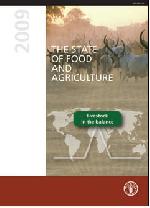
The new publication of the FAO State of Food and Agriculture (SOFA) 2009: “Livestock in the balance” is planned to be officially launched during January 2010. The State of Food and Agriculture, FAO’s major annual flagship publication, aims at bringing to a wider audience balanced science-based assessments of important issues in the field of food and agriculture. Each edition of the report contains a comprehensive, yet easily accessible, overview of a selected topic of major relevance for rural and agricultural development and for global food security.

Key messages of the report are:

  • The livestock sector is expanding rapidly, driven by population growth, rising affluence and urbanization.
  • Decisive action is required if increasing demand is to be met in ways that are environmentally sustainable and contribute to poverty alleviation and improved human health.
  • The contribution of the livestock sector to poverty alleviation should be enhanced through appropriate policy reform and investments within a framework of broader rural development policies.
  • Governance of the livestock sector should be strengthened to ensure that its development is environmentally sustainable and that it both adapts to and contributes to mitigating climate change.
  • The neglect of animal-health systems in many parts of the world must be redressed, and producers at every level must be involved in the development of animal-disease and food-safety programmes.

SOFA09_En_low-res

On-line article from ‘Farmers Weekly Interactive’, UK

OFC 2010: Business as usual will not feed the world

A “business as usual” approach to increasing food production would be useless against the challenge of feeding a growing world population, the conference heard.

John Parker, globalisation correspondent for The Economist, told delegates that agriculture needed to achieve the kind of technological breakthroughs in plant breeding and livestock development last seen in the 1960s and 70s.

“The UN predicts a world population of around 9bn by 2050 – that’s about 30% more people to feed. And for a 30% population increase, world wheat yields will need to increase by the same amount over the next 20 years.”

That was without accounting for the 1bn-odd undernourished people in the world today, he added. “So therefore we need about 40% more cereals by 2050.”

Read the entire article

The Agriculture and Consumer Protection Department of FAO, in collaboration with Embrapa, IFAD and IICA, will co-organize an international consultation on the theme: Integrated Crop-Livestock Systems for Development: The Way Forward for Production Intensification.

The consultation process will operate largely through an electronic exchange by experts during February 2010 followed by a smaller workshop in Sete Lagoas, Minas Geráis, Brazil, from 23-26 March 2010. A Background Note on the Consultation is attached for your information.

The technical discussions will focus on the following four topics across a range of types (on-farm or area-wide) and scales of crop-livestock integration (braodly defined to include trees and pastures) in different agroecologies in the developing regions:

1.  Promising integrated crop-livestock systems and innovations that merit mainstreaming and scaling, and the tactics for implementation.

2.  Input and output market linkage development for promising crop-livestock systems and associated input and output supply chain  processes and public-private service providers for different production systems and diverse markets.

3.  Political will, and policy and institutional support for the adoption and enabling the spread of innovations and practices associated with promising crop-livestock systems for food and nutritional security.

4.  Research needed to generate knowledge and innovative practices to underpin farmer adoption and scaling of promising crop-livestock systems for sustainable production intensification.

The above four topics will be offered for discussion to a diverse group of stakeholders during the month of February 2010 through an electronic consultation process. The output from the electronic consultation will form an input into the workshop process in March in Brazil.

We would be most grateful if you would kindly inform your collaborators and colleagues of the above planned electronic consultation and workshop, and provide us with names and contact details (institutional affiliation, position, e-mail, telephone and fax) of those people who you feel should be invited to participate in the electronic consultation in February 2010 and possibly the smaller workshop in March 2010.

With best regards.

Eric Kueneman, Theo Friedrich and Amir Kassam

FAO-AGP, Rome, Italy

View background document

« Previous PageNext Page »

Design a site like this with WordPress.com
Get started